|
In TIAA-CREF's new Borrowing Against Your Future survey, I think the most interesting finding is that when it comes to plan loans, retirement plan participants are contradicting themselves. Paying off debt was cited by 46% of respondents as the primary reason for taking out a plan loan. Other significant reasons include: paying for an emergency expenditure (35%), home purchase/renovation (26%), paying bills due to job loss (24%), education costs for self or children (20%), and special events such as weddings or vacations (15%). Interestingly, only 26% thought that paying off debt was a good reason to borrow against one's retirement account. What's more, 44% of respondents say that they regret taking out a plan loan, and another 23% don't regret it, but wouldn't do so again. The report suggests that participants need to be reminded and helped in focusing on saving for retirement, as that is what their accounts are there for in the first place. I would suggest an alternative solution. The data may reflect less of a contradiction and more of a dilemma. Participants are taking actions knowing that they are not in their long-term interests. I think that participants understand the importance of long-term savings, but near-term challenges are a major obstacle. What I think is needed are creative solutions to reflect that retirement savings do not occur in a vacuum. How can participants best be helped in meeting current financial stresses and future savings needs? The popularity of automatic features (auto-enrollment, auto-escalation, etc.) serves to get many participants on track in saving for the future. The tax code is designed to preserve what participants have saved through their retirement accounts. Penalties are imposed for early distributions of retirement assets, not to mention the regular taxes on these distributions. Plan loans that become due shortly after job loss might be added to the mix. What if we changed the mindset in how to approach savings, reflecting a more holistic view of the present and the future? Instead of penalizing people when their financial challenges are greatest, what if we instead came up with creative solutions that would meet immediate and future needs. I recently outlined one such idea, which in effect would allow tax-free access to retirement accounts for certified financial challenges. Participants would be encouraged to save more, knowing that they can access their money, but there would also be incentives to ensure that participants don't misuse this access. For example, job loss would be one identifiable category; a layoff notice could serve as proof of a financial challenge. If participants are contributing more because they know that they will still have access to their accounts, then if they are never laid off, their existing accounts will have grown very substantially. I have included with this post a simple chart outlining the opportunity. I would welcome any thoughts on this concept, whether you agree or disagree. 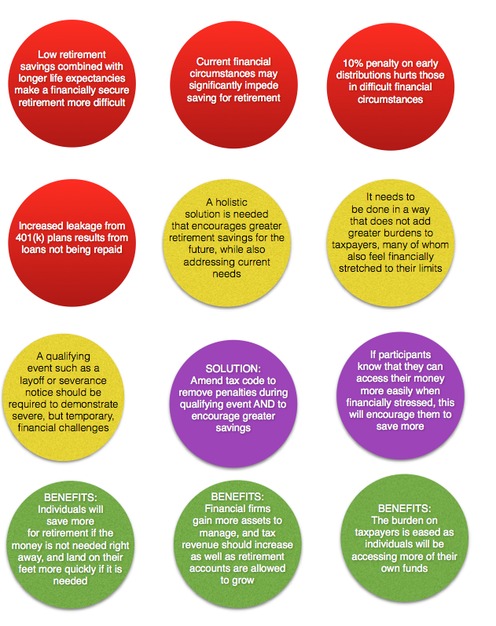
0 Comments
6/18/2014 0 Comments Participants on Steady CourseVanguard for over a decade has been providing valuable data on retirement plan participant trends, based on its own client base. The latest edition, How America Saves 2014: A Report on Vanguard 2013 Defined Contribution Plan Data, for the most part shows steady progress. A few of the highlights:
What we see from the Vanguard data is a growing, strong preference by many participants for assistance in getting them to a better place in saving for retirement. Most participants recognize that they are not financial experts. The professionally managed and auto-enrollment data would appear to reconfirm that as well. |
Blog Author - Ken FelsherWith over 25 years of writing, editing, and research experience. I enjoy sharing with my readers my love of working with content on a variety of subjects. 
CategoriesAll 401(k) 402(g) Boomers Catch-up DB Dc Deferral Limit Defined Benefit Defined Contribution ERISA Healthcare Participation Pension Professionally Managed RCS Retirement Retirement Confidence Tax Code Vanguard Women Working Archives
March 2015
|